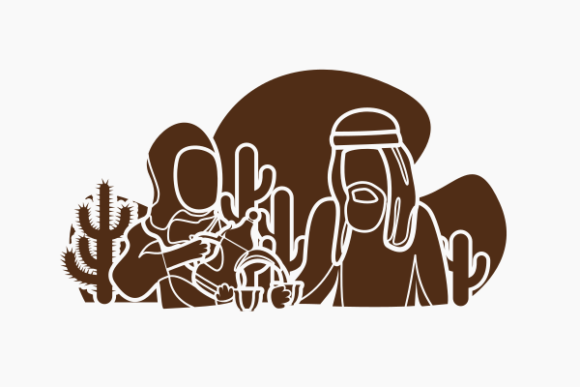
Monochrome Arab Lady Pouring Coffee
A Quiet Moment, Cleanly Stitched
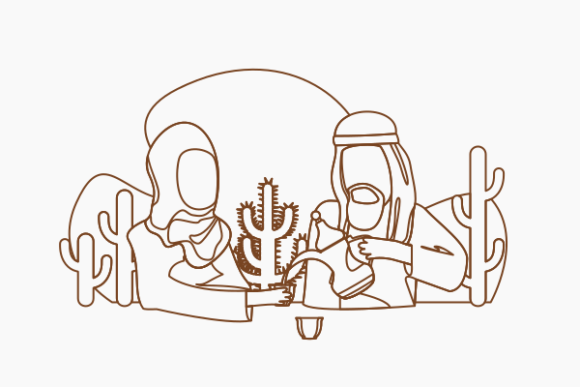
First glance at Monochrome Arab Lady Pouring Coffee lands with calm intention—not flash, not clutter, but a composed, reverent gesture. The flat monochrome style strips away distraction: no gradients, no shadows, no busy linework—just confident outlines and intentional negative space. It’s the kind of illustration that breathes on fabric instead of fighting it. I recently tested it as a central motif on a heavyweight cotton tote for a small Arabic café’s staff gift line—and it held its ground beautifully. No bleeding, no lost detail, no visual fatigue after hours of wear. That tells me something important: this isn’t just decorative. It’s culturally grounded, visually legible, and embroidery-ready.
Fits Naturally Where Meaning Meets Craft
This design doesn’t shout—it invites. That makes it ideal for projects where subtlety carries weight: embroidered pillow covers for a Ramadan nursery, minimalist aprons for home bakers specializing in Middle Eastern sweets, or delicate tea towel sets sold at boutique craft fairs. I used it on a soft unisex baby onesie (6-month size), opting for a 3.5" wide placement across the chest. With light stabilizer and 40-weight rayon thread, the satin stitch along the dallah’s curve stayed crisp, and the finjan’s rim read clearly—even at that scale. Customers responded strongly to the quiet dignity of the gesture; several asked if it was custom-drawn. That’s the mark of a strong machine embroidery design: it feels intentional, not imported.
It also works surprisingly well on sweatshirt embroidery—especially midweight fleece—because the monochrome silhouette avoids the muddiness that plagues detailed color illustrations on textured surfaces. No need to over-digitize or add underlay just to “hold shape.” The clean lines translate directly. Same goes for embroidered patches: the vector origin means sharp edges hold up through cutting, heat-sealing, and repeated washing.
Where Caution Keeps It Honest
That said, Monochrome Arab Lady Pouring Coffee isn’t universally forgiving. On stretchy fabrics like jersey or lightweight knits, the long vertical flow of the lady’s robe and the extended arm holding the dallah can distort if stabilizer isn’t layered thoughtfully. I recommend medium-cutaway + tear-away combo for anything with give. Also, avoid placing it near seams or curved areas like cap crowns unless you’re willing to resize down to 2.75" max—those fine wrist and finjan details tighten unpredictably on tight curves.
Dark fabric demands attention too. While monochrome suggests flexibility, black-on-black stitching vanishes without careful thread contrast testing. I ran a quick black-on-charcoal mockup and swapped to charcoal thread—suddenly the gesture gained warmth and clarity. Always test your thread colors on scrap first, especially for personalized gifts where clients expect precision.
What It Adds—Beyond the Stitch
This isn’t just another digital embroidery file. It elevates perceived value because it signals cultural awareness without cliché. For an Etsy seller offering custom handmade products, it differentiates from generic floral or script motifs. For a small shop owner curating small shop products, it supports brand consistency when paired with complementary Arabic calligraphy or geometric borders—no jarring stylistic jumps.
Customer trust rises when symbolism feels respectful and accurate. The dallah and finjan are rendered with proportional care—not cartoonish, not overly ornate. That authenticity reads in the finished product. And because it’s a flat, open silhouette, it integrates cleanly into printable mockups and digital previews—no awkward clipping or background bleed to fix before listing on your craft business storefront.
Designer Notes You’ll Actually Use
- Test on scrap fabric first—especially if using textured weaves like linen-look cotton or terry cloth.
- Review stitch density before scaling beyond 4.5". Dense fill in the robe area can cause puckering on lightweight fabrics.
- Confirm hoop size compatibility. At full scale (approx. 4.8"), it fits standard 5x7 hoops—but verify your own machine’s tolerance for edge clearance.
- Inspect small details in your embroidery software: the pour stream between dallah and finjan is narrow—ensure it’s digitized as a running stitch or light satin, not a fragile fill.
- Try black-and-white mockups before finalizing—this design’s strength is tonal contrast, not color.
- Compare light vs. dark fabric backgrounds in your design preview. What reads as elegant on ivory may disappear on navy without thread adjustment.
- Use proper stabilizer: cutaway for knits, tear-away for stable wovens, fusible for lightweight silks or voiles.
- Check licensing before selling finished items or bundling the SVG as part of a digital product. This is an Illustrations asset—commercial use is noted, but always confirm scope.
Final Thought: A Design That Earns Its Place
Monochrome Arab Lady Pouring Coffee doesn’t try to do everything. It does one thing well: embody a meaningful, unhurried tradition with visual economy. That makes it unusually versatile for custom apparel, holiday embroidery, wedding gifts for Arab couples, or even quiet nursery decor. It’s not loud enough for streetwear, nor intricate enough for heirloom samplers—but it’s exactly right for the growing number of makers building thoughtful, culturally resonant craft business brands. If your work values clarity, respect, and clean execution, this Graphics asset will feel less like a download and more like a trusted collaborator.